ORIGINAL RESEARCH
Blockchain Technology in Digital Health and Medical Technologies
Muhammet Damar, PhD1,2  ; Ömer Aydın, PhD3,4 ; and Fatih Safa Erenay, PhD5
1Fethiye Faculty of Business Administration, Mugla Sitki Kocman University, Mugla, Turkiye; 2Upstream Lab, MAP, Li Ka Shing Knowledge Institute, Unity Health Toronto, Toronto, Ontario, Canada; 3Associate Professor, Electrical and Electronics Engineering, Faculty of Engineering, Manisa Celal Bayar University, Manisa, Turkiye; 4Visiting Researcher, Management Science and Engineering, Faculty of Engineering, University of Waterloo, Waterloo, Ontario, Canada; 5Associate Professor, Management Science and Engineering, Faculty of Engineering, University of Waterloo, Waterloo, Ontario, Canada
Keywords: Artificial intelligence; augmented reality; big data; blockchain technology; digital health; health 5.0; healthcare innovation; Internet of Things; precision medicine; telemedicine; virtual reality
Abstract
The rapid evolution of digital health technologies has created an urgent need for secure, transparent, and interoperable data management systems. The core problem addressed in this study is the fragmentation of healthcare data and the lack of trust among stakeholders in existing digital health infrastructures. The main goal is to examine how blockchain technology can drive digital health transformation through decentralized data governance and integration with other emerging technologies.
To achieve this, the research employs a mixed bibliometric and systematic review methodology, analyzing peer-reviewed publications indexed in the Web of Science and comparing topic hierarchies with outputs from Google Scholar between 2017 and 2024. Using keyword co-occurrence and thematic mapping, six major domains were identified: genomics and precision medicine, telemedicine and mobile health, immersive technologies such as augmented and virtual reality, the Internet of Things and Health 5.0 systems, artificial intelligence and big data integration, and global and regional health management.
The findings indicate that blockchain enhances healthcare by improving data security, ensuring traceability, facilitating interoperability across platforms, and enabling real-time data sharing in clinical and research environments. It also supports regulatory compliance and patient-centered data ownership.
In conclusion, blockchain serves as a foundational technology for future digital health ecosystems, promoting transparency and decentralization across global health networks. This study contributes to the literature by offering a comprehensive framework for integrating blockchain with digital health innovations, providing valuable guidance for researchers, policymakers, and healthcare technologists.
Citation: Blockchain in Healthcare Today 2025, 8: 409.
DOI: https://doi.org/10.30953/bhty.v8.409
Copyright: © 2025 This is an open-access article distributed in accordance with the Creative Commons Attribution Non-Commercial (CC BY-NC 4.0) license, which permits others to distribute, adapt, enhance this work non-commercially, and license their derivative works on different terms, provided the original work is properly cited and the use is non-commercial. See http://creativecommons.org/licenses/by-nc/4.0.
The authors of this article own the copyright.
Submitted: May 31, 2025; Accepted: October 11, 2025; Published: November 14, 2025
Corresponding Author: Ömer Aydın, Email: omer.aydin@cbu.edu.tr
Competing interests and funding: The authors affirm no conflict of interest.
None
The global healthcare sector is undergoing a significant digital transformation, fundamentally altering how care is delivered, health data are managed, and medical services are personalized. Amid this transformation, blockchain technology has emerged as a pivotal innovation, not merely as a tool for data management, but as a foundational infrastructure capable of addressing core challenges such as data security, interoperability, and patient privacy.1,2
Originally developed for financial systems, blockchain’s decentralized, transparent, and tamper-resistant design offers solutions to critical issues in healthcare, particularly as emerging technologies such as artificial intelligence (AI), the Internet of Things (IoT), big data analytics, augmented reality (AR), virtual reality (VR), and extended reality become increasingly integrated into medical ecosystems.3,4 The convergence of these technologies requires a secure and scalable digital backbone, a role blockchain is uniquely positioned to fulfill by enabling trusted data exchange, enhancing device and system interoperability, and supporting global health collaborations.5
Here, the authors report on investigating the strategic role of blockchain in accelerating digital health transformation, presenting a forward-looking analysis of how it can support and optimize the integration of next-generation technologies. By systematically analyzing peer-reviewed literature, the study identifies six critical domains where blockchain intersects with digital health innovation.
The contributions of this study are threefold: (1) provide a structured synthesis of current research on blockchain in digital health, (2) highlight practical implications for healthcare stakeholders by outlining blockchain’s impact on transparency, data integrity, and cross-border data sharing, and (3) identify research gaps and future directions to guide technological development and policy formulation.
Ultimately, the aim of this study is to serve as a comprehensive resource for researchers, healthcare professionals, and policymakers seeking to understand, evaluate, and implement blockchain-based digital health solutions in an increasingly interconnected and data-driven medical landscape.
Related Works for Blockchain Application Areas in Digital Health and Medical Technologies
The digitalization of healthcare systems, advances in bioinformatics and genomics, the use of IoT in biomedical devices, cloud-based technologies, and the use of AI in medical and biological applications have raised particularly challenging issues in bioethics.6 In this regard, blockchain technology emerges as a critically valuable technology. Blockchain represents a data architecture whose application relies on blockchain technology and extends far beyond Bitcoin, the cryptocurrency that popularized it. In the healthcare sector, blockchain is being intensively explored by various stakeholders to optimize business processes, reduce costs, improve patient outcomes, increase compliance, and enable better use of healthcare-related data.7
In the healthcare sector, blockchain significantly enhances privacy and security by decentralizing patient data storage and reducing the risk of unauthorized access. This decentralized architecture ensures that sensitive patient information remains protected while maintaining data availability across healthcare providers. For example, one of the key benefits of using blockchain in genomics is that it enables the creation of decentralized databases that can ensure the privacy and security of sensitive genetic information. Furthermore, blockchain can facilitate the sharing of genetic data between researchers and healthcare providers, leading to more efficient and effective medical research and personalized medicine. Furthermore, it can be used to trace the origin of genetic material.8 Blockchain’s decentralized and immutable architecture enables secure and auditable sharing of sensitive genetic data. It empowers individuals with control over their genomic information and supports consent management, addressing significant privacy and governance challenges. Additionally, its application in biobanking and rare disease research enhances data integrity and facilitates collaborative efforts to advance personalized medicine.
Some biomedical devices (e.g., digital medicine) not only monitor patient data (such as diabetes devices that monitor blood sugar levels and automatically dose insulin injections) but also automatically assist the treatment processes.6 Therefore, in such cases, patient data not only pose a privacy concern but can also have a critical impact on the patient’s vital functions.
Blockchains can also serve as a digital backbone for other technologies that can interface with blockchain systems, such as cloud computing, AI, eHealth and mobile health (mHealth) devices/apps, and, more broadly, the Internet of Medical Things.9,10 In these domains, blockchain addresses patient data security and system reliability by supporting decentralized recording and sharing of remote healthcare interactions. This enhances patient engagement and equips healthcare providers with trustworthy access to information. Blockchain mitigates risks such as data breaches, fraud, and misdiagnosis, thereby reinforcing trust in digital health services. The integration with mobile health devices further safeguards personal health data collected via wearables, enabling privacy-preserving real-time monitoring.
In the healthcare field, little direct research has been conducted on metaverse technology. This is because the metaverse consists of many technologies that work together and are constantly evolving.11,12 Some of these technologies include AR, social networking, VR, blockchain technology, and AI.13 Blockchain supports secure digital interactions and data provenance in immersive healthcare technologies increasingly used for education, remote diagnosis, and patient engagement for immersive technologies such as AR, VR, the metaverse, and social media. By enabling traceability and authenticity of digital assets, blockchain ensures reliability in virtual healthcare settings and social media platforms, fostering transparent and accountable applications within these emerging ecosystems.
The proliferation of interconnected devices in IoT, Industry 4.0, and Health 5.0 ecosystems creates complex data management challenges due to the massive volume, variety, and velocity of data generated.14–16 Blockchain offers a secure, interoperable framework that enhances data sharing among diverse stakeholders, reduces medical errors, and supports real-time health monitoring, especially for vulnerable populations. Its ability to maintain data integrity across distributed networks aligns with the human-centric goals of Health 5.0.
Blockchain complements AI and big data analytics by ensuring the reliability, traceability, and security of large-scale health data used in algorithmic decision-making for AI, cloud computing, and big data integration.17–19 It supports transparent validation of AI models, strengthens security in cloud storage environments, and facilitates privacy-preserving data sharing, thus improving diagnostic accuracy, personalized care, and electronic health record management.
Blockchain plays a crucial role in addressing pandemics, infectious diseases, and healthcare inequities by enabling secure, scalable, and collaborative solutions for global and regional health challenges.20,21 Its decentralized framework facilitates global data sharing, disease surveillance, clinical trial management, and patient privacy protection. Blockchain-enabled techniques, such as federated learning, offer accurate disease prediction while maintaining confidentiality and empower marginalized populations through secure identity verification and improved healthcare access.
A review of the literature reveals that Damar et al.20 conducted a study on blockchain applications in primary healthcare. However, no article was found in the literature discussing blockchain applications within the context of current technologies and healthcare applications. Furthermore, preliminary analyses indicated that it would be appropriate to evaluate blockchain applications in healthcare under six headings. Our research addresses this gap and provides a detailed analysis to enable readers to comprehensively evaluate blockchain healthcare applications within the context of current information technologies.
Methodology
This article aims to bring together existing research and highlight emerging trends in the application of blockchain technology in digital health and healthcare technologies. In this context, a comprehensive assessment of blockchain applications in healthcare is presented by analyzing both research and review articles from the Web of Science (WoS) database.
Following a preliminary screening, blockchain applications were categorized into six critical areas. WoS served as the primary source for data collection. Through a systematic review of the literature, the main topics and application areas where blockchain is actively used in healthcare were identified. Figure 1 illustrates the search terms applied for each topic and the corresponding number of articles retrieved. To strengthen the review and provide a broader perspective for researchers in the field, additional relevant articles from Google Scholar were also included. This approach ensured a more comprehensive assessment for healthcare professionals, researchers, and policymakers.
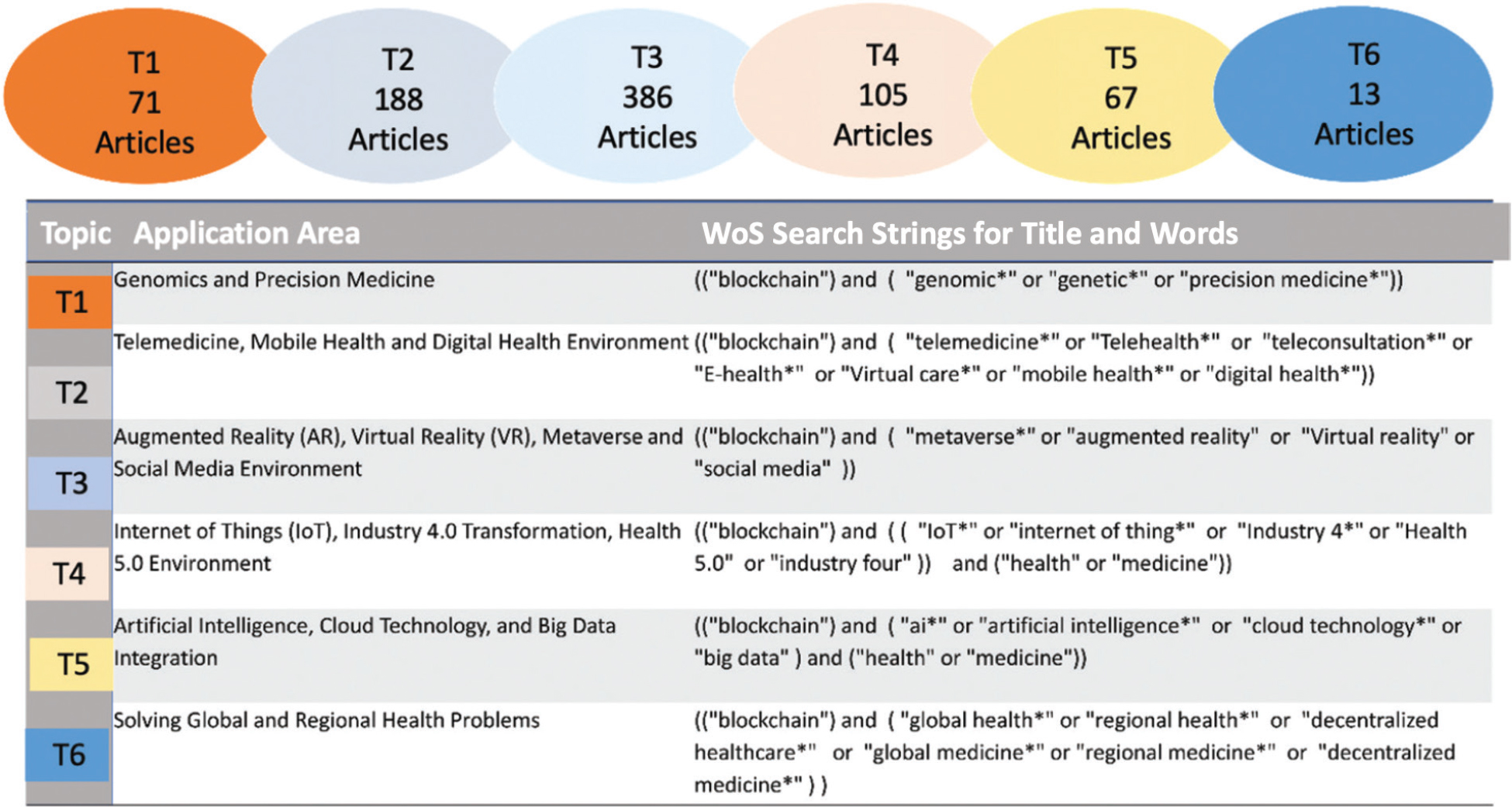
Fig. 1. Search topics and search strings for blockchain application areas in digital health and medical technologies.
Findings and Discussion
Our study represents one of the most up-to-date and comprehensive analyses of blockchain applications in healthcare. Numerous reviews,17,22 systematic reviews,23,24 scoping reviews,25,26 and research articles10,27 have addressed blockchain in healthcare. What distinguishes this study, conducted in 2025, is its direct use of data sources such as WoS, which indexes the world’s most respected and influential health sciences journals. In this context, our study extends beyond existing literature in both content and scope. It provides a detailed assessment of current trends, research, and applications related to key blockchain healthcare solutions, major information technologies, and the challenges of integrating these technologies with blockchain within healthcare systems. Preliminary analyses identified six areas of blockchain application in healthcare. This framework offers a holistic assessment of blockchain’s impact on healthcare and presents a novel perspective on the literature. These topics are as follows:
- Genomics and precision medicine,
- Telemedicine, mobile health, and digital health environment
- Augmented reality, VR, metaverse, and social media environment
- IoT Industry 4.0 Transformation, Health 5.0 Environment
- AI, cloud technology, and big data integration
- Solving global and regional health problems
As can be seen in Table 1, a structured description of each application area and the specific contributions of blockchain are presented. Table 1 synthesizes the key application areas of blockchain within digital health and medical technologies. It highlights the distinct contributions and benefits in each domain, from securing genomic data and enabling decentralized telemedicine communication to ensuring digital asset ownership in immersive environments and maintaining device data integrity in IoT frameworks. When combined with AI and big data, blockchain enhances data validation and transparency. In global health contexts, it supports secure cross-border collaboration and decentralized healthcare infrastructure development.
Collectively, this methodology enabled a comprehensive exploration of blockchain’s multifaceted role in advancing secure, transparent, and efficient healthcare solutions across diverse technological landscapes.
Blockchain Applications for Genomics and Precision Medicine
Genomics and precision medicine are rapidly developing as a revolutionary field with the potential to provide personalized healthcare. Accurate collection, processing, and analysis of genetic data are critical to creating personalized treatment plans. However, the security, confidentiality, and transparency of these data pose significant challenges in terms of protecting patient rights and ensuring data integrity. At this point, blockchain technology emerges as a solution. Velmovitsky et al.28 stated in their work that for genomics, by directly connecting data recipients and owners, blockchain can provide a secure and auditable way to share genomic data and increase its usability.
Precision medicine (or personalized medicine) focuses on protecting and improving an individual’s health before disease develops, rather than treating it. This approach aims to create personalized health management plans by considering each person’s unique characteristics, such as genetic makeup, lifestyle, and environmental factors. Shameer et al.29 emphasize that wearable biomedical devices play a crucial role in monitoring health parameters, including sleep quality, air quality, environmental exposures, diet, biomarker status, body posture, stress, blood pressure, and physical activity. Moreover, human genome data carry unique information about an individual and valuable opportunities for healthcare. Clinical interpretations derived from large genomic datasets can significantly improve healthcare outcomes and facilitate personalized medicine.30,31
Genomic data differ from traditional medical data because it indirectly provides information about an individual’s children and relatives and remains relevant even after the individual’s death. This adds complexity to data sharing.8 Data ethics is a highly debated topic in digital health and genomics. The digitization of health records, advances in bioinformatics, molecular medicine, wearable biomedical technologies, biotechnology, and synthetic biology have generated vast new datasets. How these data are shared, stored, distributed, and analyzed raises ethical debates regarding privacy, trust, accountability, justice, and fairness.6,32,33
Genomic data are shared for research in an anonymized form. Individuals have control over their genomic data and can share it for profit. In our analysis, biobanks and the use of blockchain for genomic studies have also been a highly studied area. Biobanks play an important role in achieving precision health as they provide well-characterized biological samples and related data for disease prediction, diagnosis, and treatment, and blockchain technology can be used for the integration of population-based biobanks34 or in the consent process for biobanking.35 In clinical genomics, sharing rare genetic disease information between genetic databases and laboratories is essential to determine the pathogenic significance of variants to enable the diagnosis of rare genetic diseases.36
Blockchain-based platforms are being developed to address both technical and governance issues related to sharing genomic data.37 In the field of genomics, blockchain facilitates a secure and verifiable method for exchanging data by directly linking data owners with recipients, thereby enhancing data accessibility.28 Decentralized, privacy-focused predictive modeling enables multiple institutions to collaboratively build more generalizable models on health or genomic datasets by exchanging partially trained models rather than sensitive patient-level information, minimizing risks such as centralized control.38
Appendix A presents a content analysis of research articles from the WoS database on genomics and precision medicine. These keywords offer valuable insight into prevailing discussions on blockchain applications within these fields. The trend topic, network, and overlay analyses reveal not only technical terms but also the problem areas, potential applications, and ethical/legal considerations that researchers are emphasizing. As shown in Appendix A, the most prominent keywords are blockchain, genetic algorithm, AI, privacy, security, smart contracts, data sharing, scalability, access control, and consensus algorithm.
Evaluating these keywords collectively, the general themes can be summarized as follows: data security and privacy (privacy, security, access control), data sharing and patient rights (data sharing, smart contracts), technical optimization (scalability, consensus algorithm, genetic algorithm), IoT integration, and legal/ethical aspects (privacy, smart contracts). Blockchain demonstrates strong potential for the secure, patient-centered management of genomic and precision medicine data. Nonetheless, technical and ethical challenges, including scalability, privacy, and regulatory compliance, are being addressed through emerging consensus mechanisms and smart contract models. This framework shows that findings from the analysis of genomics and precision medicine research guide both existing technical solutions and future research directions.
Regarding consent management, blockchain’s transparent and unalterable ledger ensures that all participants have access to a permanent, timestamped record of consent, improving accountability and transparency throughout the consent process.28 As can be seen, blockchain technology has the potential to overcome these challenges in genomic and precision medicine applications due to its decentralized nature and immutable data recording capabilities. By enabling genetic data to be securely stored, shared, and analyzed, Blockchain could offer a more accurate, reliable and transparent data management model in the medical world.
Blockchain enhances data security and accessibility, providing a stable and secure platform for advancing personalized medicine and research.39 Numerous blockchain applications exist in genomics. For instance, companies such as EncrypGen, LunaDNA, and Nebula Genomics are developing blockchain platforms that allow individuals to safely share their genomic data.40,41 These DNA data marketplaces store genomic information and enable its use by interested commercial parties, while offering a share of the revenue to data contributors. Personal genomic and health data are valuable for both publicly funded research and for-profit organizations developing new drugs, treatments, and diagnostic tests. While individuals often support data sharing for research, the for-profit nature of these platforms, data ownership rights, and fairness in benefit distribution raise ethical questions.41
A central issue in blockchain is determining data ownership and rights during its circulation. Anonymizing personal data is a common approach to using data for the public good while protecting autonomy. However, as Karabekmez6 notes, anonymizing genomic data is challenging. Removing personal identifiers alone is insufficient because genomic data is inherently self-identifying, making re-identification possible. Wjst42 proposed detailed access restrictions or obtaining informed consent as solutions to this issue. Thus, while blockchain enables highly secure data sharing, it also involves complex ethical and legal considerations.
Overall, blockchain introduces critical innovations in genomics and precision medicine, including genomic data security and privacy, data sharing and research collaboration, personalized treatment planning, drug development and clinical trials, data trading and tokenization, and patient consent management. By combining genomic data privacy, patient-centered control, transparent collaboration, smart contracts, and secure sharing, blockchain advances both scientific progress and ethical/legal compliance in genomic research and personalized medicine.
Blockchain Applications in Telemedicine, Mobile Health, and Digital Health Environment
Telemedicine encompasses technologies that enable patients to connect with healthcare professionals and receive services even when geographically distant. Mobile health, on the other hand, refers to services that deliver and manage healthcare through smartphones and other mobile devices. Both technologies extend the reach of traditional healthcare, allowing individuals to manage their health more effectively and access medical services more efficiently. The rapid growth of IoT devices and wearable technologies has created new opportunities for medical sensors, particularly in remote patient monitoring. A subset of this trend is wireless body area networks (WBANs), in which patients are equipped with wearable or implanted medical devices that provide real-time measurements of vital signs, such as heart rate or glucose levels.8 The use of remote patient monitoring is growing rapidly; in 2016, 7.1 million patients worldwide utilized such systems as part of their healthcare management.43 Consequently, alongside telemedicine and mobile health services, WBANs represent a critical technology for effective remote patient monitoring. Technologies in digital health, including telemedicine, mobile health, and remote monitoring, are becoming increasingly integral to modern medical practice. Ensuring the secure and precise handling of medical data supports the progress of digital health, which brings numerous positive outcomes. Additionally, mobile health contributes to cost reduction by streamlining care delivery and improving connectivity between patients and healthcare professionals. Mobile apps enable both patients and providers to actively manage medical conditions through almost real-time monitoring and interventions, regardless of their physical locations.44
Recently, healthcare services have undergone a major transformation in the digitalization process. Telemedicine, mHealth, and digital health applications make the interaction between patients and healthcare providers more efficient, accessible, and sustainable. However, critical challenges such as data security, patient privacy, and system reliability arise in these digital health environments. Blockchain technology stands out as a powerful tool that can help solve these problems with its decentralized structure and unchangeable data storage features. Blockchain technology is particularly preferred for the secure recording of remote healthcare services and for more secure data sharing in the provision of electronic healthcare services. Durneva et al. reported in their study that blockchain-based patient care applications include medical information systems, personal health records, mobile health, telehealth and telemedicine, data protection systems and social networks, health information exchanges and remote monitoring systems, and medical research systems.45 These blockchain-based healthcare applications can improve patient engagement and empowerment, improve healthcare providers’ access to information, and enhance the use of healthcare information for medical research. Blockchain-supported mobile health studies by Motohashi et al.46 support this idea.
Appendix B presents a content analysis of research articles on telemedicine, mobile health, and the digital health environment obtained from the WoS database. The analysis shows that blockchain, security, telemedicine, e-health, smart contracts, medical services, healthcare, digital health, access control, authentication, AI, interoperability, IoT, medical diagnostic imaging, telehealth, and traceability are among the most intensively researched topics in the literature. Studies address various dimensions, including technical, legal, ethical, and operational aspects. While blockchain provides a promising infrastructure for security, data sharing, smart contracts, and traceability in telemedicine, mobile health, and digital health, critical challenges such as scalability, AI integration, IoT device security, and compliance with international standards remain. The main topics are summarized under six headings in Table 2.
The development of compact mobile devices equipped with wireless communication and integrated biosensors has transformed healthcare systems. These devices, often worn as accessories, allow individuals to continuously gather health-related data. This form of medical support, which uses mobile devices to remotely monitor patients and deliver healthcare services, is referred to as mobile health. While mobile health offers numerous advantages and is gaining widespread adoption, it also raises significant privacy concerns.47 Liang et al.48 highlighted the fact that personal health data collected through mobile and wearable technologies holds immense and growing value for healthcare providers and medical research alike. They further emphasized that secure and user-friendly sharing of this personal health information is crucial for enhancing collaboration within healthcare and that blockchain technology presents a promising solution to address privacy challenges and security risks in current data storage and sharing frameworks.
Griggs et al.10 adopted a specialized blockchain based on the Ethereum protocol, not only to facilitate the safe and secure use of medical sensors but also to eliminate security risks associated with remote patient monitoring systems. Blockchain-based strategies facilitate secure real-time remote monitoring, enabling practitioners to track their patients’ health conditions from remote locations while maintaining a secure, safe, and up-to-date patient history.
Every passing day, many diseases and patients are straining the healthcare system, making it difficult to continue traditional medical services. To overcome these challenges, the healthcare sector is increasingly shifting towards telehealth, which uses sophisticated technology to provide more comprehensive medical treatments at lower prices.
Telemedicine can be defined as the remote delivery of healthcare services over telecommunication infrastructure. The main purpose of telemedicine is to provide clinical support by overcoming geographical disruptions and connecting people in remote areas with the help of different information and communication technologies.49 In the general remote diagnosis scheme, the collected medical data are stored in the cloud, and these data can be leaked or falsified. Because blockchain has decentralized storage features, some schemes use blockchains to overcome the security problem of cloud storage, but most of them lack an auditing mechanism.50 However, this interaction can bring various challenges, such as data breaches, misdiagnoses, and fraud. In addition, the outsourcing of healthcare data to public cloud platforms brings some new challenges in terms of security.51
While the decentralization aspect of blockchain increases the overall robustness of existing healthcare systems, trust and traceability are key action points to focus on. Blockchain technology, paired with smart contracts, automates the operations and services of telehealth and telemedicine efficiently and reliably. There are applications in the field of telehealth and telemedicine that demonstrate the practicality of secure data transfers using blockchain technology.52 Ahmad et al.53 stated that blockchain technology can enhance telehealth and telemedicine services by providing remote healthcare services in a decentralized, tamper-proof, transparent, traceable, reliable, and secure manner for more secure data access in telehealth and enable healthcare professionals to accurately detect fraud related to physician training credentials and medical test kits commonly used for home diagnostics.53
Telemedicine and mobile health suffer from various risks in practice, such as data breaches, restricted access in the medical community, incorrect diagnosis and prescription, fraud and abuse.46,54 At this point, blockchain is a critical technology for the solution. As can be seen, blockchain technology can increase the security and transparency of health data for the secure storage, sharing, and verification of patient data in telemedicine and mobile health applications. It also offers opportunities to prevent fraud and make processes more efficient in digital health environments. It is seen that blockchain interactive applications stand out for the development of more effective and secure applications in telemedicine, mobile health, and digital health fields.
Blockchain Applications in Augmented Reality, Virtual Reality, Metaverse, and Social Media Environments in the Healthcare Sector
Recently, AR, VR, the metaverse, and social media have initiated a significant transformation in the fields of digital interaction and experience. Especially recently, metaverse technology has caused a transformation in many areas.13,55 These technologies allow users to interact with virtual worlds, explore digital environments, and combine the real world with virtual layers, offering great potential in many sectors, from entertainment to education and business. However, the rapidly developing nature of these digital environments also brings with it significant challenges such as data security, user privacy, and ownership of digital assets.
Blockchain technology can play an important role in solving these problems with its decentralized structure and secure data recording features. For example, Shahbazi and Byun56 stated in their studies that the proper examination of social media data could provide significant support to various criminal investigations, but government officials emphasized that this is quite difficult. At this point, they have seen blockchain technology as a solution for digital forensic science investigations due to its contribution to traceability.
At this point, Lawrence and Shreelekshmi57 have identified blockchain technology as a solution in the field of forensic science to ensure the validity and reliability of visual evidence for video integrity. Appendix C presents the content analysis of research articles obtained from the WoS data source on AR, VR, Metaverse, and Social Media Environment in the Healthcare Sector.
The prominent topics include blockchain, metaverse, AI, security, VR, social media, AR, smart contracts, digital twins, privacy, IoT, cryptocurrency, avatars, authentication, scalability, Web3, consumer electronics, and interoperability. These keywords highlight fundamental research questions regarding the secure and sustainable management of next-generation digital experiences in healthcare, such as metaverse hospitals, AR/VR therapies, and social media health communities. Blockchain serves as a critical infrastructure for security, identity management, data ownership, and economic modeling in metaverse and AR/VR-enabled healthcare environments. Nonetheless, challenges such as scalability, regulatory compliance, interoperability, and the ethical use of digital twins58 remain key research areas. This framework identifies future research gaps, particularly in digital twin management, Web 3.0-based health economics, social media content authentication, and AR/VR device security, as summarized in Table 3.
The metaverse is a cohesive, continuous, and shared virtual space where multiple users can interact in a fully immersive, highly dynamic, and interconnected digital network.13,55,59 It represents the convergence of three key technological trends: telepresence, digital twins, and blockchain technology.59 When applied to healthcare, the metaverse holds significant promise for enhancing medical services, offering a vast potential for medical education, advanced training, and remote surgical procedures.13,60 Within the medical domain, healthcare professionals can leverage the metaverse to improve the efficiency of diagnosis, training, and treatment processes, while fostering strong interactions between medical staff and patients in a digital environment.61
Metaverse technology relies extensively on blockchain applications to manage asset ownership, user interactions, and security. Cryptocurrencies generate economic value within the metaverse, making blockchain essential not only for securing the virtual environment but also for facilitating safe economic activities. The most prominent cryptocurrencies in this context include MANA (Decentraland’s native currency), SAND (the primary currency of The Sandbox platform), and AXS (the governance token of Axie Infinity, notable for its play-to-earn model).
Moztarzadeh et al.62 highlighted in their research the fact that creating digital twins of dental conditions within the metaverse is a practical and effective method to utilize the immersive capabilities of this technology, bridging real-world dentistry with its virtual counterpart. They stated that these technologies can create virtual facilities and environments for patients, doctors, and researchers to access various medical services and saw the blockchain as a critical tool for data interaction in the virtual environment. For educators in the health field, learning where the source of the data is read or presented and seeing the history of the data can be of critical value. Funk et al.63 stated that recently, many new digital platforms have emerged in the field of learning, including massive open online courses and social media-based education. At this point, they stated that it is quite difficult to determine the origin, validity, and accountability of shared and acquired knowledge. As can be seen, the management of digital assets, secure data sharing, data sources, data monitoring, and accuracy of interactive experiences in AR, VR, metaverse, and social media platforms can be provided with blockchain. It also has many different usage areas in the literature.
Blockchain Applications in the Internet of Things, Industry 4.0 Transformation, Health 5.0 Environment
The IoT, Industry 4.0, and Health 5.0 are the leading technologies of digital transformation and have the potential to transform every aspect of life. While IoT improves data collection and analysis processes by interacting with each other and central systems, Industry 4.0 uses these data to provide efficiency, automation, and flexibility in production processes. Health 5.0 aims to provide human-centered digital health solutions and aims to use individuals’ health data more effectively. However, a strong data management and security infrastructure is needed for these advanced systems to operate securely, transparently, and efficiently. At this point, blockchain technology emerges as an important solution in IoT, Industry 4.0, and Health 5.0 environments.
Several significant solutions have been proposed in the literature regarding IoT, Industry 4.0, and Health 5.0. For example, Wu et al. proposed a healthcare 5.0 framework for surgery that deploys a secure and distributed network using blockchain to show transactions between different parties in the orthopedic surgery process.64 In this way, they were able to demonstrate the feasibility of using an IoT-based blockchain network in orthopedic surgery, which can reduce medical errors and improve data interoperability between different parties. Rovere et al.65 stated that blockchain technology has the potential to improve data security, interoperability, and collaboration in orthopedics. In another example, Fatoum et al.2 stated that the fact that electronic health records are not easily accessible to a treating emergency physician is perhaps a classic example of a disconnected medical ecosystem. For example, if a heart failure patient has IoT devices that detect potassium, oxygen, and vital signs, they stated that it could be effective in saving the lives of many patients with heart and kidney diseases. Appendix D shows the content analysis of research articles obtained from the WoS data source on IoT, Industry 4.0 Transformation, and Health 5.0 Environment.
Key words that emerged in the analysis include blockchain, IoT, security, healthcare, medical services, cloud computing, fog computing, privacy, access control, AI, authentication, data privacy, e-health, computer architecture, deep learning, interoperability, monitoring, smart contracts, COVID-19, hospitals, Hyperledger Fabric, integrity, sensors, smart health, Bluetooth, and e-adoption. Together, these keywords indicate that blockchain is positioned in the literature not only as a tool for data security but also as a foundational backbone of the IoT-enabled healthcare ecosystem. In particular, research emphasizes scalability, real-time data processing, ethical data sharing, and regulatory frameworks.
Table 4 presents the key discussion topics and research questions identified in the literature regarding blockchain applications in the Internet of Things, Industry 4.0 transformation, and Health 5.0 environments. It summarizes the main thematic directions and future research gaps derived from the reviewed studies, complementing the content analysis illustrated in Appendix D.
Alfayez and Khan66 noted that as the elderly population continues to grow, falls among the elderly will become a critical public health issue. To address this, they developed a fall detection system for the elderly using IoT and blockchain. Kuberkar and Singhal67 proposed a solution based on blockchain and IoT technologies to ensure adequate availability of blood units at the national level. Rajendran68 addressed the problem of blood inventory management by exchanging blood and providing transparency and traceability using the blockchain technique. The author concluded that this method can significantly outperform the current system.
Zheng et al.69 stated in their study that distributed ledger technologies integrated with IoT technologies can greatly improve health-related data sharing. They stated that with their proposed solutions based on Increasing Organ Transplant Access Tangle and Masked Authenticated Messaging (MAM), they can overcome the challenges faced by other traditional blockchain-based solutions in terms of cost, efficiency, scalability, and flexibility in data access management. Increasing Organ Transplant Access is a cryptocurrency with a new architecture called Tangle, focused on IoT solutions. It is an alternative to blockchain.
Unlike traditional blockchains that use blocks and a linear chain, Tangle uses a directed, acyclic graph structure. This structure can be thought of as a network rather than a chain. One of the main advantages of Tangle is that it is virtually free.27,70 In summary, the work by Zheng et al.71 proposes a solution that uses the IOTA Tangle to create a scalable and free data-sharing network while utilizing MAM to guarantee the privacy, security, and controlled access of sensitive health data. As can be seen, a strong data management and security infrastructure is needed to operate securely, transparently, and efficiently in IoT, Industry 4.0, and Health 5.0 environments. This can be achieved with blockchain technology.
Blockchain Applications in Artificial Intelligence, Cloud Technology, and Big Data Integration in the Healthcare Sector
AI, cloud technology, and big data have become some of the most important elements of digital transformation today. These three technologies integrate, making data processing, analysis, and decision-making processes more efficient, faster, and more accurate.
While AI allows meaningful information to be extracted from big data, cloud technology facilitates the storage and access of this data. Blockchain technology is used to ensure the reliability of the data used by AI systems and to analyze large amounts of health data, or big health data, reliably. In their study, Dwivedi et al.72 stated that billions of sensors, devices, and vehicles have been connected to each other over the internet in recent years. Furthermore, remote patient monitoring, one of these technologies, is widely used for the treatment and care of patients today. These security and privacy issues related to medical data can lead to a delay in the progress of treatment and can even endanger the patient’s life. Therefore, they suggested using a blockchain to ensure that big data related to healthcare services are managed and analyzed securely.
Appendix E presents a content analysis of research articles obtained from the WoS database on AI, cloud technology, and big data integration in the healthcare sector. The most prominent topics, in order of importance, include blockchain, AI, big data, cloud computing, access control, healthcare, COVID-19, e-health, electronic health records, health big data, medical services, privacy, security, animal health, healthcare management, monitoring, and medical big data.
The published literature indicates that blockchain is not only a tool for data security but also a fundamental backbone of AI and cloud ecosystems. Big data supports the development of more accurate and unbiased AI models, enhanced by the data verification and security that blockchain technology provides. Moreover, blockchain–cloud hybrid models are gaining prominence in healthcare, as the integration of these technologies enables rapid data access and processing.
Table 5 summarizes the key discussion topics and research questions identified in the literature regarding blockchain applications in artificial intelligence, cloud technology, and big data integration within the healthcare sector. This table complements the findings shown in Appendix E by outlining thematic insights, technical challenges, and emerging research gaps in this interdisciplinary field.
As seen in the analysis performed, advanced, mathematical, and deep learning algorithms have recently played an important role in diagnosing medical parameters and diseases.62 Kumar et al.73 have presented a method that combines deep learning models learned locally on the blockchain to improve the prediction of lung cancer in healthcare systems to protect privacy and enable data sharing. Mantey et al.74 have presented an advanced deep learning approach that can automatically reveal which food a patient with special needs should consume according to their disease and certain characteristics such as gender, weight, age, etc., with the secure communication channel of the recommendation system, thanks to the blockchain privacy system they proposed in their study.
Personal health records can be secured in a cloud-based data lake.75 Kaur et al.76 proposed a blockchain-based platform that can be used to store and manage electronic medical records in the cloud environment. In addition, Yazdinejad et al.77 stated that in any interconnected healthcare system, interactions between patients, doctors, nurses, and other healthcare practitioners should be secure and efficient. For example, they stated that all members should be authenticated and securely connected to minimize security and privacy violations from a given network, and they proposed an authentication system with blockchain technology in their work. As can be seen, ensuring the integration of powerful technologies such as AI, cloud technology, and big data, and protecting the security, privacy, and integrity of data are significant challenges. Blockchain technology, thanks to its decentralized structure and immutable data recording features, can realize the integration of these three technologies securely and transparently. Blockchain offers a potential solution to ensure the accuracy of AI algorithms, manage big data flow, and increase data security in cloud environments.
The federated learning model reduces complexity, while blockchain technology supports distributed data management with strong privacy protections. Specifically, the proposed federated learning community ensembles a federated blockchain-based framework that enables secure model training and data sharing among multiple healthcare institutions.
Blockchain Applications for Solving Global and Regional Health Problems
Global health problems are complex and require large-scale solutions that affect millions of people worldwide. Global health problems are serious challenges that affect not only individuals but also entire societies and health systems. Problems such as epidemics, infectious diseases, lack of access to health services, and security of health data are among the biggest threats in the field of health worldwide.
The COVID-19 pandemic, in particular, shows how quickly such health crises spread and their effects on a global scale, as well as revealing the inadequacies of existing systems in the provision of health services. In addition, the management and protection of health data have become more critical with increasing digitalization. At this point, blockchain technology emerges for appropriate and secure data sharing in global problems. For example, Subramanian and Subramanian (2022)78 reported that recent developments in digital pathology resulting from developments in imaging and digitization have increased the convenience and usability of pathology for disease diagnosis, especially in oncology, urology, and gastroenteric diagnosis. At this point, AI deep learning-supported image processing has a significant place; however, data sharing is a critical problem, and blockchain has been evaluated in the literature as a solution.79
Recent research indicates that deep learning models achieve better performance and generalization when trained on large datasets.73 This is particularly important for producing more accurate results in the diagnosis of rare diseases, which often require data collection from numerous sources worldwide or across regions. Tagliafico et al.80 noted that blockchain technology could enhance the value of radiological data in both clinical practice and research. This includes applications related to patient digital records, radiology reports, privacy management, quantitative image analysis, cybersecurity, radiomics, and the integration of AI.
The federated learning model reduces complexity, while blockchain technology supports distributed data management with strong privacy protections. Specifically, the proposed federated learning community ensembles a Federated Learning Ensembled Deep Learning Blockchain Model (FLED-Block) for COVID-19 prediction that gathers data from multiple healthcare centers, enhances the model using a hybrid capsule learning network, and accurately predicts outcomes while ensuring privacy and controlled data sharing among authorized users.81 For instance, during the COVID-19 pandemic, this system achieved a prediction accuracy of 98.2%.81
Additionally, motion sensor data analyzed with deep learning algorithms can classify human activities and assess the severity of essential tremor during various movements.71 Another important application concerns homeless populations. Researchers highlight the fact that the absence of official identification documents and restricted access to personal records are significant barriers preventing homeless individuals from gaining resilience and overcoming life challenges.82 This issue is particularly pronounced in countries like the United States, the United Kingdom, and Canada.83–85 Therefore, regional or global initiatives leveraging blockchain-based solutions could be developed to improve the quality of life for homeless people.
Appendix E presents a content analysis of research articles obtained from the WoS database on global and regional health problems. The prominent topics emerging from the analysis include blockchain, global health, healthcare, challenges, IoT, security, aging, AI, authentication, data sharing, decentralized healthcare data, disease surveillance, epidemics, health policy, health informatics, identity management, and infectious diseases. These findings suggest that blockchain is viewed not only as a technical data security solution but also as a strategic tool in global health management. The literature emphasizes blockchain’s role in strengthening international cooperation and policy development through transparent data sharing for global health initiatives. Post-COVID-19 studies particularly highlight blockchain’s capacity for real-time outbreak monitoring and reporting. In addition, decentralized health data infrastructures are recommended as potential solutions to improve healthcare access and ensure data security in developing countries.
Blockchain applications for addressing global and regional health problems are categorized under six headings in Table 6: solutions to global and regional health challenges, infectious disease surveillance and outbreak management, data security and privacy, IoT integration and real-time tracking, AI-supported analysis, and aging populations with chronic diseases. As shown in the table, reproducibility, data sharing, privacy protection, and patient recruitment for clinical trials remain significant challenges in contemporary clinical research. Emerging technologies like blockchain could play a pivotal role in addressing these issues and warrant increased attention from the clinical research community.86
Blockchain is also essential for advancing toward universal health coverage.87 For instance, during global health crises such as the COVID-19 pandemic, establishing a worldwide infectious disease surveillance and case tracking system becomes crucial for early outbreak detection and containment.88 In their study, Khan et al. demonstrated how blockchain combined with machine learning can be applied effectively to infectious disease monitoring, highlighting the fact that their system successfully balances public health needs with the protection of individual privacy.89 Damar et al.21 stated that blockchain technology is the most prominent technology for combating a global pandemic and is critical for providing ideal global healthcare. The findings also demonstrate that global healthcare is becoming more questionable, particularly during the COVID-19 pandemic, and that blockchain technology is a particularly prominent technology in this regard.
Yazdinejad et al.77 emphasized that in any interconnected healthcare system, secure and efficient communication among patients, doctors, nurses, and other healthcare professionals is essential. They highlighted the need for authenticating all participants and ensuring secure connections to reduce risks of security breaches and privacy violations within the network. To address this, they proposed a blockchain-based identity verification system. Furthermore, challenges such as reproducibility, data sharing, protecting personal data privacy, and enrolling patients in clinical trials remain significant hurdles in modern clinical research. Blockchain technology offers promising solutions to these issues and deserves the focused attention of the entire clinical research community.86
Even after privacy and trust issues are addressed, health data must be clean, well-organized, reliable, and neutral against any form of discrimination to be used effectively. This challenge must be taken seriously by both private and governmental institutions; otherwise, the potential benefits of the digital age will remain unattainable.6 Only under such conditions can we genuinely speak of global healthcare services.
In summary, issues such as epidemics, infectious diseases, lack of access to healthcare, and security of health data threaten global health systems and require innovative approaches for solutions. In addition, different and more constructive solutions that emphasize information security may be needed to cope with global or regional problems. Blockchain technology is a technology that has the potential to provide solutions to all these challenges. Thanks to its decentralized structure, transparency, and unchangeable data recording, it enables health data to be stored and shared securely. These features offer significant advantages for securing patient information and managing access to healthcare more effectively. Since global health problems also require multinational collaboration, the transparency and security offered by blockchain can facilitate data sharing between international healthcare systems.
Conclusions
The integration of blockchain technology into digital health is not a matter of potential but an emerging reality with substantial implications across the healthcare continuum. This study has explored blockchain’s role in six critical areas: genomics and precision medicine, telemedicine and mobile health, immersive technologies, IoT and Health 5.0, AI and big data integration, and global health challenges, each representing a significant frontier in the digital transformation of healthcare.
The findings suggest that blockchain offers foundational capabilities that directly address longstanding challenges in healthcare, such as data fragmentation, lack of interoperability, and concerns over security and privacy. In genomics and precision medicine, blockchain empowers patients with ownership and control over their data while ensuring secure and auditable sharing mechanisms that are crucial for research and clinical collaborations. In telemedicine and mobile health, it strengthens data integrity and enables traceable interactions, thereby enhancing trust in remote care delivery. For immersive technologies like AR, VR, and the metaverse, blockchain supports provenance and authenticity of digital assets, fostering reliable educational, diagnostic, and therapeutic environments.
IoT and Health 5.0 applications benefit from blockchain’s ability to ensure device data integrity, automate workflows through smart contracts, and promote real-time interoperability. The synergy between blockchain and AI/big data reinforces the reliability of algorithmic healthcare decisions by ensuring data transparency, reproducibility, and auditability. Moreover, at the global level, blockchain proves instrumental in enhancing disease surveillance, equitable access to care, and privacy-preserving data sharing for pandemics and underserved populations.
However, the challenges in blockchain technology and its applications remain. Blockchain scalability, energy consumption, regulatory uncertainties, and the need for standardized frameworks across healthcare systems must be addressed. Furthermore, while blockchain enhances data security, it does not eliminate the need for robust governance models, user education, and ethical safeguards.
Final Thoughts
Blockchain stands as a transformative enabler in digital health. By decentralizing data management, enhancing transparency, and safeguarding privacy, it aligns well with the pressing needs of modern healthcare systems. The evidence synthesized in this study affirms that blockchain can augment existing digital health technologies and pave the way for innovative, equitable, and resilient healthcare models. Future research should prioritize interdisciplinary collaboration, pilot implementations, and regulatory harmonization to realize blockchain’s full potential in delivering patient-centric, secure, and intelligent healthcare solutions.
Limitations and Future Studies
While this study offers a comprehensive synthesis of current applications and the potential of blockchain technology in digital health, several limitations must be acknowledged:
- Scope of Literature: The study primarily draws on studies indexed in the WoS and supplemented by Google Scholar. While these databases cover a wide range of peer-reviewed content, relevant contributions from industry white papers, preprints, and emerging innovations in less-represented regions may have been underrepresented.
- Implementation Challenges: Many studies focus on theoretical frameworks, pilot projects, or conceptual designs rather than large-scale, real-world implementations. As a result, this study may overrepresent the potential benefits of blockchain while underrepresenting operational difficulties, regulatory barriers, and stakeholder resistance in clinical practice.
- Lack of Standardization: The absence of standardized metrics and frameworks in the reviewed studies made it difficult to perform a quantitative synthesis or comparative analysis. The study, therefore, relies heavily on qualitative insights.
- To address these limitations and further advance the field, future research should aim to overcome them by incorporating a broader range of literature sources, such as Scopus and others, expanding the scope of analysis, and focusing more on implementation challenges. Specifically, future studies should move beyond theoretical frameworks and pilot projects to explore large-scale, real-world applications. Additionally, the lack of standardized metrics and frameworks should be addressed to enable quantitative synthesis and comparative analysis across studies.
Contributors
Muhammet Damar contributed to conceptualization, methodology, validation, formal analysis, data curation, writing—original draft, and writing—review and editing. Ömer Aydın contributed to the conceptualization, methodology, validation, formal analysis, data curation, writing the original draft, writing—review and editing. Fatih Safa Erenay contributed to conceptualization, investigation, writing—review and editing, and supervision.
Data Availability Statement (DAS), Data Sharing, Reproducibility, and Data Repositories
The data that support the findings of this study are available from the corresponding author upon reasonable request.
Application of AI-Generated Text or Related Technology
AI-assisted tools were employed in this study for minor tasks such as grammar correction, language refinement, and proofreading. These tools were used transparently and in a manner that does not compromise the authors’ intellectual contribution. The authors affirm that all substantive content reflects original thought and upholds academic integrity.
Acknowledgments
M. Damar & O. Aydın were supported by the Scientific and Technological Research Council of Türkiye (TUBITAK) under the TUBITAK 2219 International Postdoctoral Research Fellowship program. M. Damar thanks the Upstream Lab, MAP, Li Ka Shing Knowledge Institute at the University of Toronto for its excellent hospitality.
References
- Agbo CC, Mahmoud QH, Eklund JM. Blockchain technology in healthcare: a systematic review. Healthcare. 2019;7(2):56. https://doi.org/10.3390/healthcare7020056
- Fatoum H, Hanna S, Halamka JD, Sicker DC, Spangenberg P, Hashmi SK. Blockchain integration with digital technology and the future of health care ecosystems: systematic review. J Med Internet Res. 2021;23(11):e19846. https://doi.org/10.2196/19846
- Rehman A, Abbas S, Khan MA, Ghazal TM, Adnan KM, Mosavi A. A secure healthcare 5.0 system based on blockchain technology entangled with federated learning technique. Comput Biol Med. 2022;150:106019. https://doi.org/10.1016/j.compbiomed.2022.106019
- Zhou F, Huang Y, Li C, Feng X, Yin W, Zhang G, et al. Blockchain for digital healthcare: case studies and adoption challenges. Intelligent Med. 2024;4(04):215–25. https://doi.org/10.1016/j.imed.2024.09.001
- Zhang P, White J, Schmidt DC, Lenz G, Rosenbloom ST. FHIRChain: applying blockchain to securely and scalably share clinical data. Comput Struct Biotechnol J. 2018; 16:267–78. https://doi.org/10.1016/j.csbj.2018.07.004
- Karabekmez ME. Data ethics in digital health and genomics. New Bioethics. 2021;27(4):320–33. https://doi.org/10.1080/20502877.2021.1996965
- Mackey TK, Kuo TT, Gummadi B, Clauson KA, Church G, Grishin D, et al. ‘Fit-for-purpose?’–challenges and opportunities for applications of blockchain technology in the future of healthcare. BMC Med. 2019;17(1):68. https://doi.org/10.1186/s12916-019-1296-7
- Kumar D. Benefits and roles of blockchain in genomics. In: Malviya R, Sundram S, editors. Blockchain for healthcare 4.0. Boca Raton: CRC Press; 2023, p. 224–44.
- Brogan J, Baskaran I, Ramachandran N. Authenticating health activity data using distributed ledger technologies. Comput Struct Biotechnol J. 2018;16:257–66. https://doi.org/10.1016/j.csbj.2018.06.004
- Griggs KN, Ossipova O, Kohlios CP, Baccarini AN, Howson EA, Hayajneh T. Healthcare blockchain system using smart contracts for secure automated remote patient monitoring. J Med Syst. 2018;42(7):130. https://doi.org/10.1007/s10916-018-0982-x
- Agrali O, Aydin O. Tweet classification and sentiment analysis on metaverse related messages. J Metaverse. 2021;1(1):25–30. https://doi.org/10.2139/ssrn.4171318
- Karaarslan E, Aydin O, Yazici Yilmaz S, Tinmaz H, Eken S, Gokce Narin N, et al. Shaping the future of metaverse research: innovation, collaboration, and Journal of Metaverse’s academic impact. J Metaverse. 2025;5(2):73–91. https://doi.org/10.57019/jmv.1664054
- Damar M. What the literature on medicine, nursing, public health, midwifery, and dentistry reveals: an overview of the rapidly approaching metaverse. J Metaverse. 2022;2(2):62–70. https://doi.org/10.57019/jmv.1132962
- Verma A, Bhattacharya P, Madhani N, Trivedi C, Bhushan B, Tanwar S, et al. Blockchain for industry 5.0: vision, opportunities, key enablers, and future directions. IEEE Access. 2022;10:69160–91. https://doi.org/10.1109/ACCESS.2022.3186892
- Gupta KK, Saha S, Sahoo SK, Goswami SS. Revolutionizing healthcare industry 5.0: exploring the potential of blockchain technology for medical applications. J Technol Innov Energy. 2023;2(3):76–93. https://doi.org/10.56556/jtie.v2i3.610
- Sizan NS, Dey D, Layek MA, Uddin MA, Huh EN. Evaluating blockchain platforms for IoT applications in industry 5.0: a comprehensive review. Blockchain: Res Appl. 2025;6(3):100276. https://doi.org/10.1016/j.bcra.2025.100276
- Abed SA, Gök M. Big data and artificial intelligence on the blockchain: a review. Babylon J Artif Intell. 2023;2023:1–4. https://doi.org/10.58496/BJAI/2023/001
- Pablo RGJ, Roberto DP, Victor SU, Isabel GR, Paul C, Elizabeth OR. Big data in the healthcare system: a synergy with artificial intelligence and blockchain technology. J Integr Bioinform. 2022;19(1):20200035. https://doi.org/10.1515/jib-2020-0035
- Alici S, Damar M, Goksen Y. Blok zincir teknolojisine akademik yönden ne kadar hazırız: Türkiye adresli blok zincir konusundaki uluslararası yayınların analizi ve alanın gelişimine yönelik öneriler. J Inf Syst Manag Res. 2024;6(1):40–62. https://doi.org/10.59940/jismar.1483935
- Damar M, Aydin O, Erenay FS. Blockchain applications in core healthcare services: patient data, research, and institutional processes. Blockchain Healthc Today. 2025;8(2):408. https://doi.org/10.30953/bhty.v8.408
- Damar M, Pinto AD, Erenay FS, Aydin O. Impact of COVID-19 on primary health care research trends and suggestions for better services approaches via blockchain based applications: impact of COVID-19 on PHC & blockchain based applications. Blockchain Healthc Today. 2025;8(1):400. https://doi.org/10.30953/bhty.v8.400
- Ghosh PK, Chakraborty A, Hasan M, Rashid K, Siddique AH. Blockchain application in healthcare systems: a review. Systems. 2023;11(1):38. https://doi.org/10.3390/systems11010038
- Ng WY, Tan TE, Movva PV, Fang AHS, Yeo KK, Ho D, et al. Blockchain applications in health care for COVID-19 and beyond: a systematic review. Lancet Digit Health. 2021;3(12):e819–e829. https://doi.org/10.1016/S2589-7500(21)00210-7
- Elangovan D, Long CS, Bakrin FS, Tan CS, Goh KW, Yeoh SF, et al. The use of blockchain technology in the health care sector: systematic review. JMIR Med Inform. 2022;10(1):e17278. https://doi.org/10.2196/17278
- Hasselgren A, Kralevska K, Gligoroski D, Pedersen SA, Faxvaag A. Blockchain in healthcare and health sciences—a scoping review. Int J Med Inform. 2020;134:104040. https://doi.org/10.1016/j.ijmedinf.2019.104040
- Abu-Elezz I, Hassan A, Nazeemudeen A, Househ M, Abd-Alrazaq A. The benefits and threats of blockchain technology in healthcare: a scoping review. Int J Med Inform. 2020;142:104246. https://doi.org/10.1016/j.ijmedinf.2020.104246
- Silvano WF, Marcelino R. Iota Tangle: a cryptocurrency to communicate Internet-of-Things data. Future Gener Comput Syst. 2020;112:307–19. https://doi.org/10.1016/j.future.2020.05.047
- Velmovitsky PE, Bublitz FM, Fadrique LX, Morita PP. Blockchain applications in health care and public health: increased transparency. JMIR Med Inform. 2021;9(6):e20713. https://doi.org/10.2196/20713
- Shameer K, Badgeley MA, Miotto R, Glicksberg BS, Morgan JW, Dudley JT. Translational bioinformatics in the era of real-time biomedical, health care and wellness data streams. Brief Bioinform. 2017;18(1):105–24. https://doi.org/10.1093/bib/bbv118
- Alghazwi M, Turkmen F, Van Der Velde J, Karastoyanova D. Blockchain for genomics: a systematic literature review. Distributed Ledger Technol: Res Pract. 2022;1(2):1–28. https://doi.org/10.1145/3563044
- Caskey T. Precision medicine: functional advancements. Ann Rev Med. 2018;69(1):1–18. https://doi.org/10.1146/annurev-med-041316-090905
- Kaya A, Gümüş R, Aydın Ö. Sağlık verilerinde istatistiksel zaman serisi yaklaşımı ile aykırılık analizi. In: Uluslararası Avrasya Sağlık Bilimleri Kongresi (IEHSC 2021). Trabzon, Turkey; 2021, p. 160–1.
- Kaya A, Gümüş R, Aydın Ö. Time series outlier analysis for model, data and human-induced risks in COVID-19 symptoms detection. Middle East J Sci. 2021;7(2):123–36. https://doi.org/10.51477/mejs.970510
- Lin JC, Liu YL, Hsiao WW, Fan CT. Integrating population-based biobanks: catalyst for advances in precision health. Comput Struct Biotechnol J. 2024;24:690–8. https://doi.org/10.1016/j.csbj.2024.10.049
- Barnes C, Aboy MR, Minssen T, Allen JW, Earp BD, Savulescu J, et al. Enabling demonstrated consent for biobanking with blockchain and generative AI. Am J Bioethics. 2024;25(4):96–111. https://doi.org/10.1080/15265161.2024.2416117
- Albalwy F, Brass A, Davies A. A blockchain-based dynamic consent architecture to support clinical genomic data sharing (ConsentChain): proof-of-concept study. JMIR Med Inform. 2021;9(11):e27816. https://doi.org/10.2196/27816
- Shabani M. Blockchain-based platforms for genomic data sharing: a de-centralized approach in response to the governance problems? J Am Med Inform Assoc. 2019;26(1):76–80. https://doi.org/10.1093/jamia/ocy149
- Kuo TT, Gabriel RA, Ohno-Machado L. Fair compute loads enabled by blockchalin: sharing models by alternating client and server roles. J Am Med Inform Assoc. 2019;26(5):392–403. https://doi.org/10.1093/jamia/ocy180
- Gautam S, Menon M, Rana R. The role of blockchain in genomics sciences. In: Chaudhary A, Singh R, Agarwal G, editors. Blockchain in Health Sciences. 2025. p. 411–40.
- Ullah HS, Aslam S. Blockchain in healthcare and medicine: a contemporary research of applications, challenges, and future perspectives. arXiv preprint arXiv:2004.06795. 2020.
- Ahmed E, Shabani M. DNA data marketplace: an analysis of the ethical concerns regarding the participation of the individuals. Front Genet. 2019;10:1107. https://doi.org/10.3389/fgene.2019.01107
- Wjst M. Caught you: threats to confidentiality due to the public release of large-scale genetic data sets. BMC Med Ethics. 2010;11(1):21. https://doi.org/10.1186/1472-6939-11-21
- Yue X, Wang H, Jin D, Li M, Jiang W. Healthcare data gateways: found healthcare intelligence on blockchain with novel privacy risk control. J Med Syst. 2016;40(10):218. https://doi.org/10.1007/s10916-016-0574-6
- Ichikawa D, Kashiyama M, Ueno T. Tamper-resistant mobile health using blockchain technology. JMIR mHealth and uHealth. 2017;5(7):e7938. https://doi.org/10.2196/mhealth.7938
- Durneva P, Cousins K, Chen M. The current state of research, challenges, and future research directions of blockchain technology in patient care: systematic review. J Med Internet Res. 2020;22(7):e18619. https://doi.org/10.2196/18619
- Motohashi T, Hirano T, Okumura K, Kashiyama M, Ichikawa D, Ueno T. Secure and scalable mhealth data management using blockchain combined with client hashchain: system design and validation. J Med Internet Res. 2019;21(5):e13385. https://doi.org/10.2196/13385
- Tomaz AE, Do Nascimento JC, Hafid AS, De Souza JN. Preserving privacy in mobile health systems using non-interactive zero-knowledge proof and blockchain. IEEE Access. 2020;8:204441–58. https://doi.org/10.1109/ACCESS.2020.3036811
- Liang X, Zhao J, Shetty S, Liu J, Li D. Integrating blockchain for data sharing and collaboration in mobile healthcare applications. In 2017 IEEE 28th Annual International Symposium on Personal, Indoor, and Mobile Radio Communications (PIMRC) 2017 Oct 8 (pp. 1–5). IEEE.
- Katal A, Sethi V, Choudhury T. Potential of blockchain in telemedicine. In: Choudhury T, Katal A, Um J-S, Rana A, Al-Akaidi M, editors. Telemedicine: the computer transformation of healthcare 2022 Aug 25 (pp. 167–184). Cham: Springer International Publishing. https://doi.org/10.1007/978-3-030-99457-0_10
- Wang W, Wang L, Zhang P, Xu S, Fu K, Song L, et al. A privacy protection scheme for telemedicine diagnosis based on double blockchain. J Inform Sec Appl. 2021;61:102845. https://doi.org/10.1016/j.jisa.2021.102845
- Guo R, Shi H, Zheng D, Jing C, Zhuang C, Wang Z. Flexible and efficient blockchain-based ABE scheme with multi-authority for medical on demand in telemedicine system. IEEE Access. 2019;7:88012–25. https://doi.org/10.1109/ACCESS.2019.2925625
- Jain N, Gupta V, Dass P. Blockchain: a novel paradigm for secured data transmission in telemedicine. In: Jude HD, Gupta D, Khanna A, Khamparia A, editors. Wearable telemedicine technology for the healthcare industry 2022 Jan 1 (pp. 33–52). London: Academic Press. https://doi.org/10.1016/b978-0-323-85854-0.00003-4
- Ahmad RW, Salah K, Jayaraman R, Yaqoob I, Omar M, Ellahham S. Blockchain-based forward supply chain and waste management for COVID-19 medical equipment and supplies. IEEE Access. 2021;9:44905–27. https://doi.org/10.1109/ACCESS.2021.3066503
- Abugabah A, Nizamuddin N, Alzubi AA. Decentralized telemedicine framework for a smart healthcare ecosystem. IEEE Access. 2020;8:166575–88. https://doi.org/10.1109/ACCESS.2020.3021823
- Damar M. Metaverse shape of your life for future: a bibliometric snapshot. J Metaverse. 2021;1(1):1–8.
- Shahbazi Z, Byun YC. NLP-based digital forensic analysis for online social network based on system security. Int J Environ Res Public Health. 2022;19(12):7027. https://doi.org/10.3390/ijerph19127027
- Lawrence L, Shreelekshmi R. Edwards curve digital signature algorithm for video integrity verification on blockchain framework. Sci Just. 2024;64(4):367–76. https://doi.org/10.1016/j.scijus.2024.04.008
- Aydın Ö, Karaarslan E. Covid-19 belirtilerinin tespiti için dijital ikiz tabanlı bir sağlık bilgi sistemi. In: Online International Conference of COVID-19 (CONCOVID); 12–14 June 2020; İstanbul, Türkiye.
- Hulsen T. Applications of the metaverse in medicine and healthcare. Adv Lab Med/Avances en Medicina de Laboratorio. 2024;5(2):159–65. https://doi.org/10.1515/almed-2023-0124
- Fang G, Sun Y, Almutiq M, Zhou W, Zhao Y, Ren Y. Distributed medical data storage mechanism based on proof of retrievability and vector commitment for metaverse services. IEEE J Biomed Health Inform. 2023;28(11):6298–307. https://doi.org/10.1109/JBHI.2023.3272021
- Shao L, Tang WE, Zhang Z, Chen X. Medical metaverse: technologies, applications, challenges and future. J Mech Med Biol. 2023;23(02):2350028. https://doi.org/10.1142/S0219519423500288
- Moztarzadeh O, Jamshidi M, Sargolzaei S, Keikhaee F, Jamshidi A, Shadroo S, et al. Metaverse and medical diagnosis: a blockchain-based digital twinning approach based on MobileNetV2 algorithm for cervical vertebral maturation. Diagnostics. 2023;13(8):1485. https://doi.org/10.3390/diagnostics13081485
- Funk E, Riddell J, Ankel F, Cabrera D. Blockchain technology: a data framework to improve validity, trust, and accountability of information exchange in health professions education. Acad Med. 2018;93(12):1791–4. https://doi.org/10.1097/ACM.0000000000002326
- Wu C, Tang YM, Kuo WT, Yip HT, Chau KY. Healthcare 5.0: A secure and distributed network for system informatics in medical surgery. Int J Med Inform. 2024;186:105415. https://doi.org/10.1016/j.ijmedinf.2024.105415
- Rovere G, Bosco F, Miceli A, Ratano S, Freddo G, D’Itri L, et al. Adoption of blockchain as a step forward in orthopedic practice. Eur J Transl Myol. 2024;34(2):12197. https://doi.org/10.4081/ejtm.2024.12197
- Alfayez F, Bhatia Khan S. IoT-blockchain empowered Trinet: optimized fall detection system for elderly safety. Front Bioeng Biotechnol. 2023;11:1257676. https://doi.org/10.3389/fbioe.2023.1257676
- Kuberkar S, Singhal TK. Factors influencing the adoption intention of blockchain and internet-of-things technologies for sustainable blood bank management. Int J Healthc Inform Syst Inform (IJHISI). 2021;16(4):1–21. https://doi.org/10.4018/IJHISI.20211001.oa15
- Rajendran S. Application of blockchain technique to reduce platelet wastage and shortage by forming hospital collaborative networks. IISE Trans Healthc Syst Eng. 2021;11(2):128–44. https://doi.org/10.1080/24725579.2020.1864522
- Zheng X, Sun S, Mukkamala RR, Vatrapu R, Ordieres-Meré J. Accelerating health data sharing: a solution based on the internet of things and distributed ledger technologies. J Med Internet Res. 2019;21(6):e13583. https://doi.org/10.2196/13583
- Guo F, Xiao X, Hecker A, Dustdar S. Characterizing IOTA tangle with empirical data. In: GLOBECOM 2020–2020 IEEE Global Communications Conference; 2020; IEEE. p. 1–6.
- Zheng X, Vieira A, Marcos SL, Aladro Y, Ordieres-Meré J. Activity-aware essential tremor evaluation using deep learning method based on acceleration data. Parkinsonism Relat Disord. 2019;58:17–22. https://doi.org/10.1016/j.parkreldis.2018.08.001
- Dwivedi AD, Srivastava G, Dhar S, Singh R. A decentralized privacy-preserving healthcare blockchain for IoT. Sensors. 2019;19(2):326. https://doi.org/10.3390/s19020326
- Kumar R, Wang W, Kumar J, Yang T, Khan A, Ali W, et al. An integration of blockchain and AI for secure data sharing and detection of CT images for the hospitals. Comput Med Imaging Graph. 2021;87:101812. https://doi.org/10.1016/j.compmedimag.2020.101812
- Mantey EA, Zhou C, Anajemba JH, Okpalaoguchi IM, Chiadika OD. Blockchain-secured recommender system for special need patients using deep learning. Front Public Health. 2021;9:737269. https://doi.org/10.3389/fpubh.2021.737269
- Panwar A, Bhatnagar V, Khari M, Salehi AW, Gupta G. A Blockchain framework to secure personal health record (PHR) in IBM cloud-based data lake. Comput Intellig Neurosci. 2022;2022(1):3045107. https://doi.org/10.1155/2022/3045107
- Kaur H, Alam MA, Jameel R, Mourya AK, Chang V. A proposed solution and future direction for blockchain-based heterogeneous medicare data in cloud environment. J Med Syst. 2018;42:1–1. https://doi.org/10.1007/s10916-018-1007-5
- Yazdinejad A, Srivastava G, Parizi RM, Dehghantanha A, Choo KK, Aledhari M. Decentralized authentication of distributed patients in hospital networks using blockchain. IEEE J Biomed Health Inform. 2020;24(8):2146–56. https://doi.org/10.1109/JBHI.2020.2969648
- Subramanian H, Subramanian S. Improving diagnosis through digital pathology: proof-of-concept implementation using smart contracts and decentralized file storage. J Med Internet Res. 2022;24(3):e34207. https://doi.org/10.2196/34207
- Chapala V, Bojja P. IoT based lung cancer detection using machine learning and cuckoo search optimization. Int J Perv Comput Commun. 2021;17(5):549–62. https://doi.org/10.1108/IJPCC-10-2020-0160
- Tagliafico AS, Campi C, Bianca B, Bortolotto C, Buccicardi D, Francesca C, et al. Blockchain in radiology research and clinical practice: current trends and future directions. La radiologia medica. 2022;127(4):391–7. https://doi.org/10.1007/s11547-022-01460-1
- Durga R, Poovammal E. Fled-block: federated learning ensembled deep learning blockchain model for covid-19 prediction. Front Public Health. 2022;10:892499. https://doi.org/10.3389/fpubh.2022.892499
- Khurshid A, Gadnis A. Using blockchain to create transaction identity for persons experiencing homelessness in America: policy proposal. JMIR Res Protocols. 2019;8(3):e10654. https://doi.org/10.2196/10654
- Kaufman D. Expulsion: a type of forced mobility experienced by homeless people in Canada. Urban Geogr. 2022;43(3):321–43. https://doi.org/10.1080/02723638.2020.1853919
- Alpert JS. Homeless in America. Am J Med. 2021;134(3):295–6. https://doi.org/10.1016/j.amjmed.2020.10.002
- Paudyal V, Vohra N, Price M, Jalal Z, Saunders K. Key causes and long-term trends related to emergency department and inpatient hospital admissions of homeless persons in England. Int J Emerg Med. 2023;16(1):48. https://doi.org/10.1186/s12245-023-00526-9
- Benchoufi M, Ravaud P. Blockchain technology for improving clinical research quality. Trials. 2017;18(1):1–5. https://doi.org/10.1186/s13063-017-2035-z
- Till BM, Peters AW, Afshar S, Meara JG. From blockchain technology to global health equity: can cryptocurrencies finance universal health coverage? BMJ Glob Health. 2017;2(4):e000570. https://doi.org/10.1136/bmjgh-2017-000570corr1
- Lee HA, Kung HH, Lee YJ, Chao JC, Udayasankaran JG, Fan HC, et al. Global infectious disease surveillance and case tracking system for COVID-19: development study. JMIR Med Inform. 2020;8(12):e20567. https://doi.org/10.2196/20567
- Khan RU, Kumar R, Haq AU, Khan I, Shabaz M, Khan F. Blockchain-based trusted tracking smart sensing network to prevent the spread of infectious diseases. IRBM. 2024;45(2):100829. https://doi.org/10.1016/j.irbm.2024.100829
Copyright Ownership: This is an open-access article distributed in accordance with the Creative Commons Attribution Non-Commercial (CC BY-NC 4.0) license, which permits others to distribute, adapt, enhance this work non-commercially, and license their derivative works on different terms, provided the original work is properly cited and the use is non-commercial. See http://creativecommons.org/licenses/by-nc/4.0.
The authors of this article own the copyright.
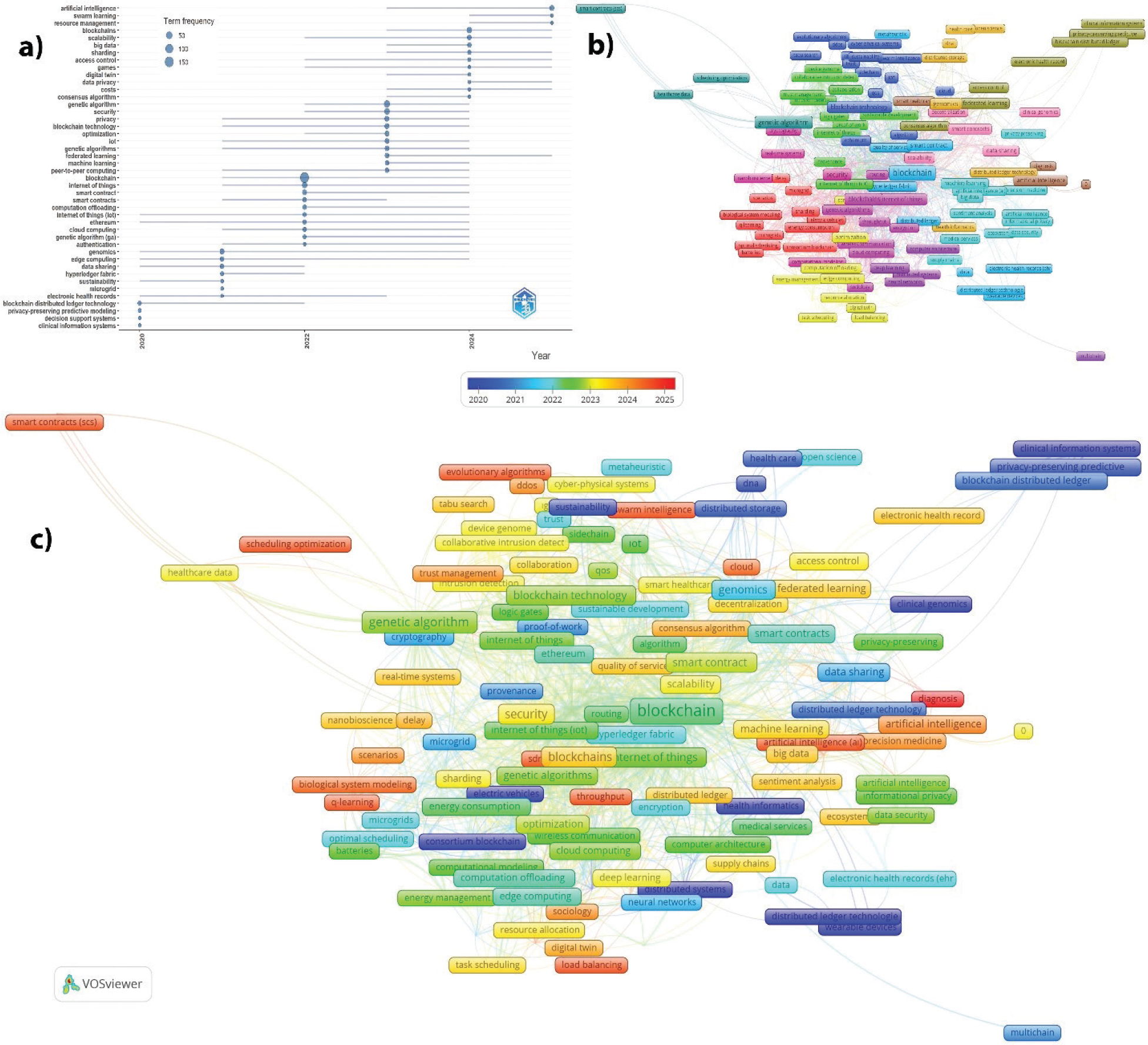
Appendix A. Articles’ trend topics (a), network (b), and overlay analyses (c) about blockchain applications for genomics and precision medicine.
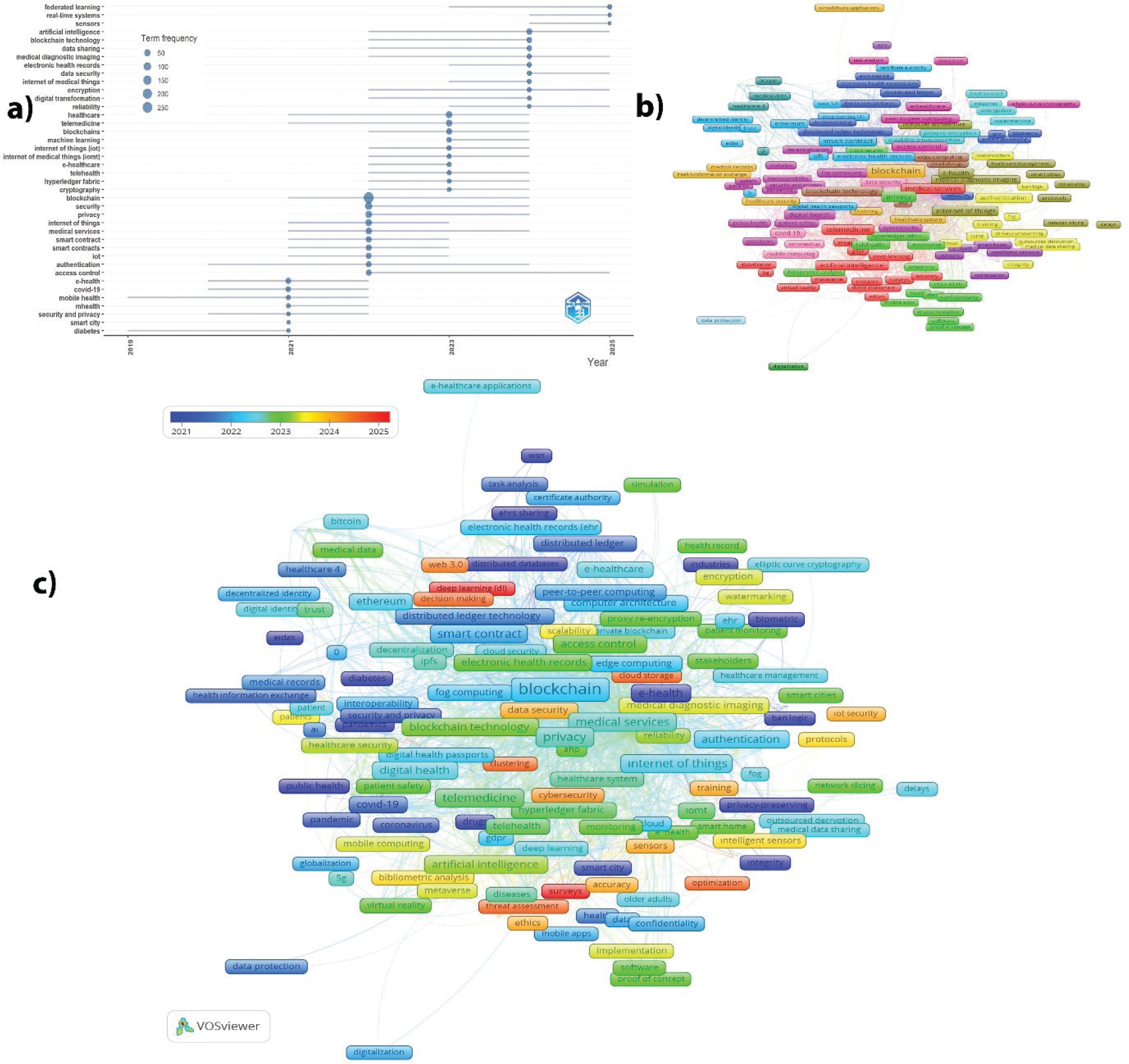
Appendix B. Articles’ trend topics (a), network (b), and overlay analyses (c) about blockchain applications in telemedicine, mobile health and digital health environment.
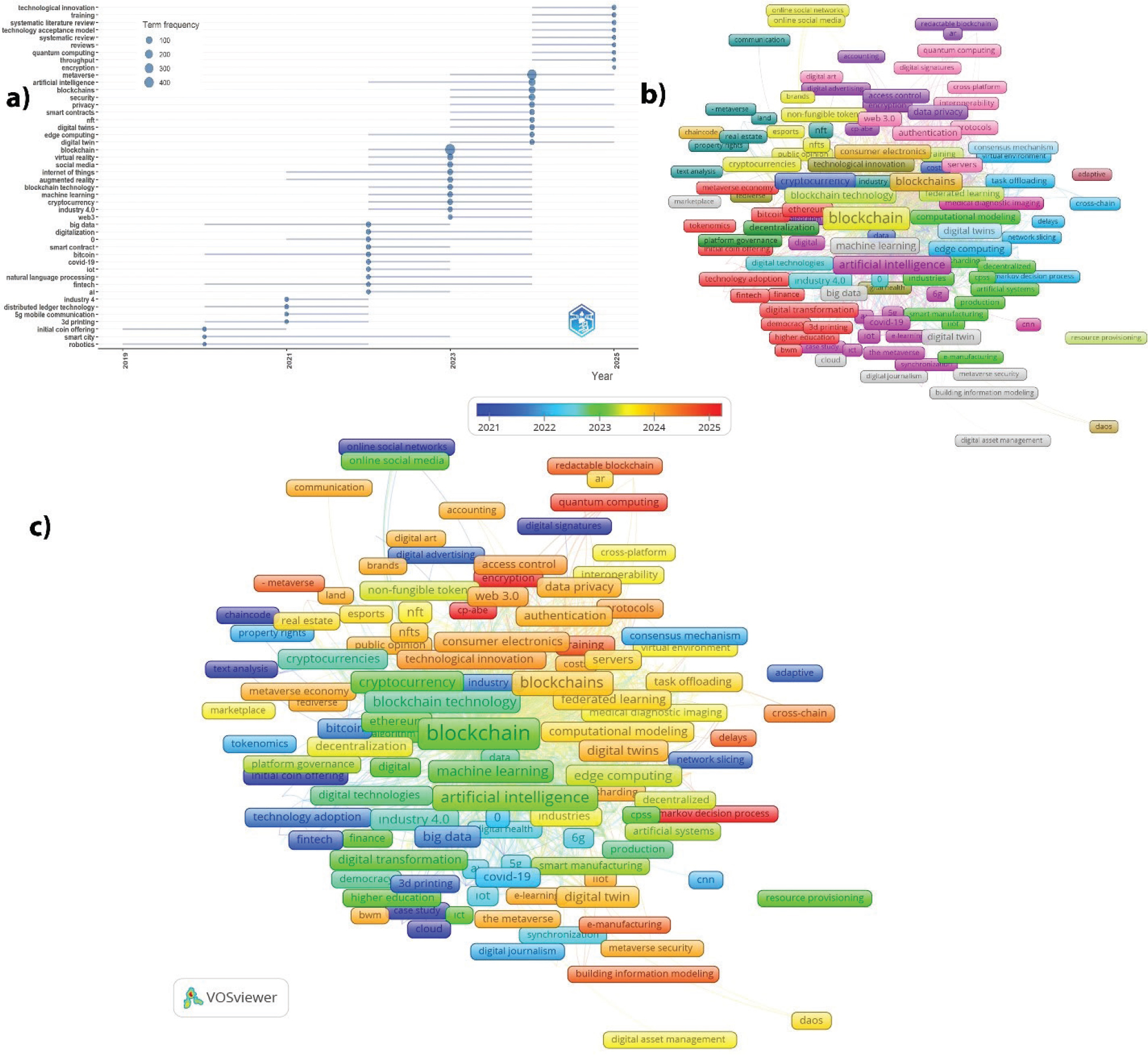
Appendix C. Articles’ trend topics (a), network (b), and overlay analyses (c) blockchain applications in augmented reality (AR), virtual reality (VR), metaverse, and social media environments in the healthcare sector.
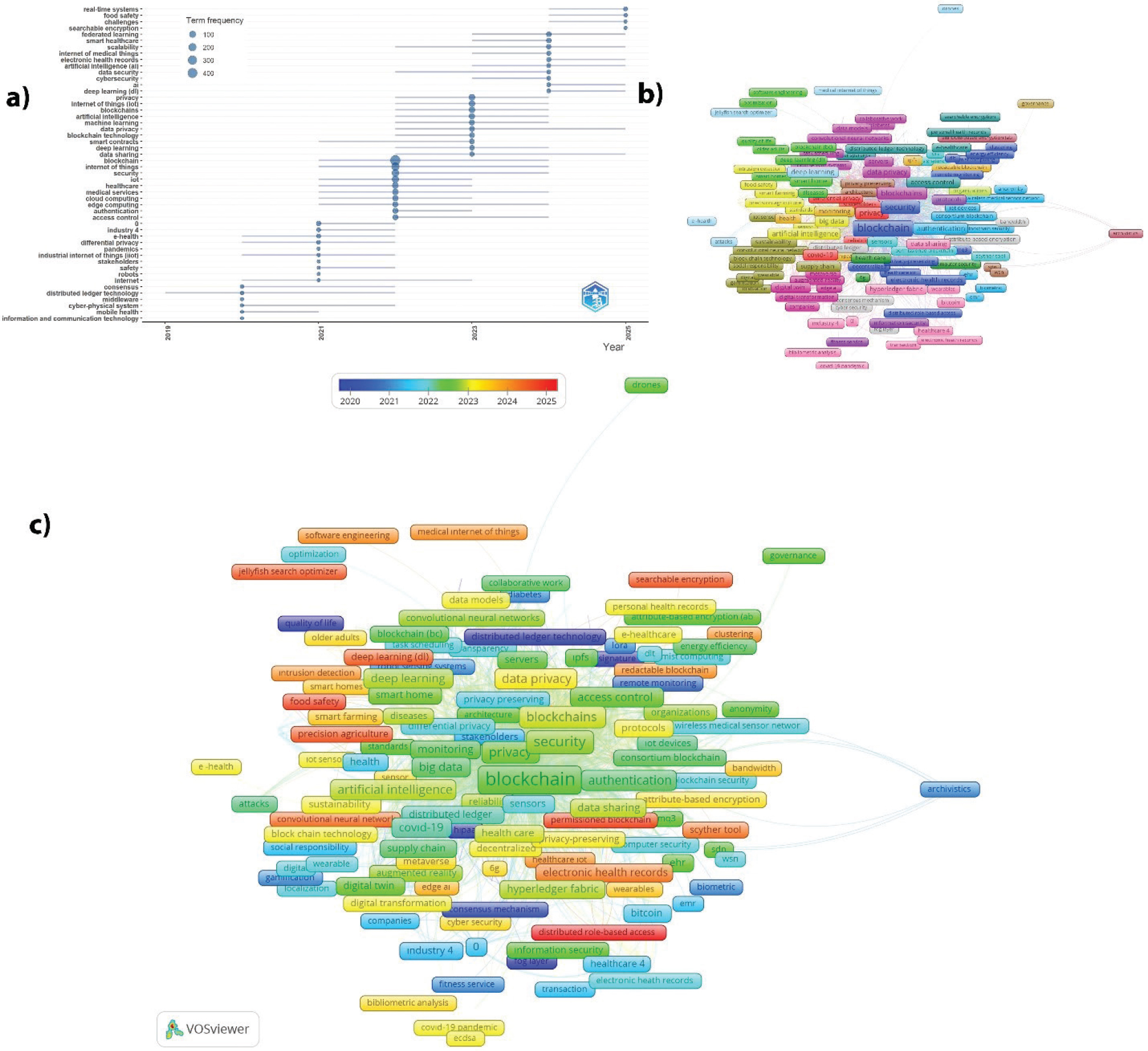
Appendix D. Articles’ trend topics (a), network (b), and overlay analyses (c) blockchain applications in the internet of things, industry 4.0 transformation, health 5.0 environment.
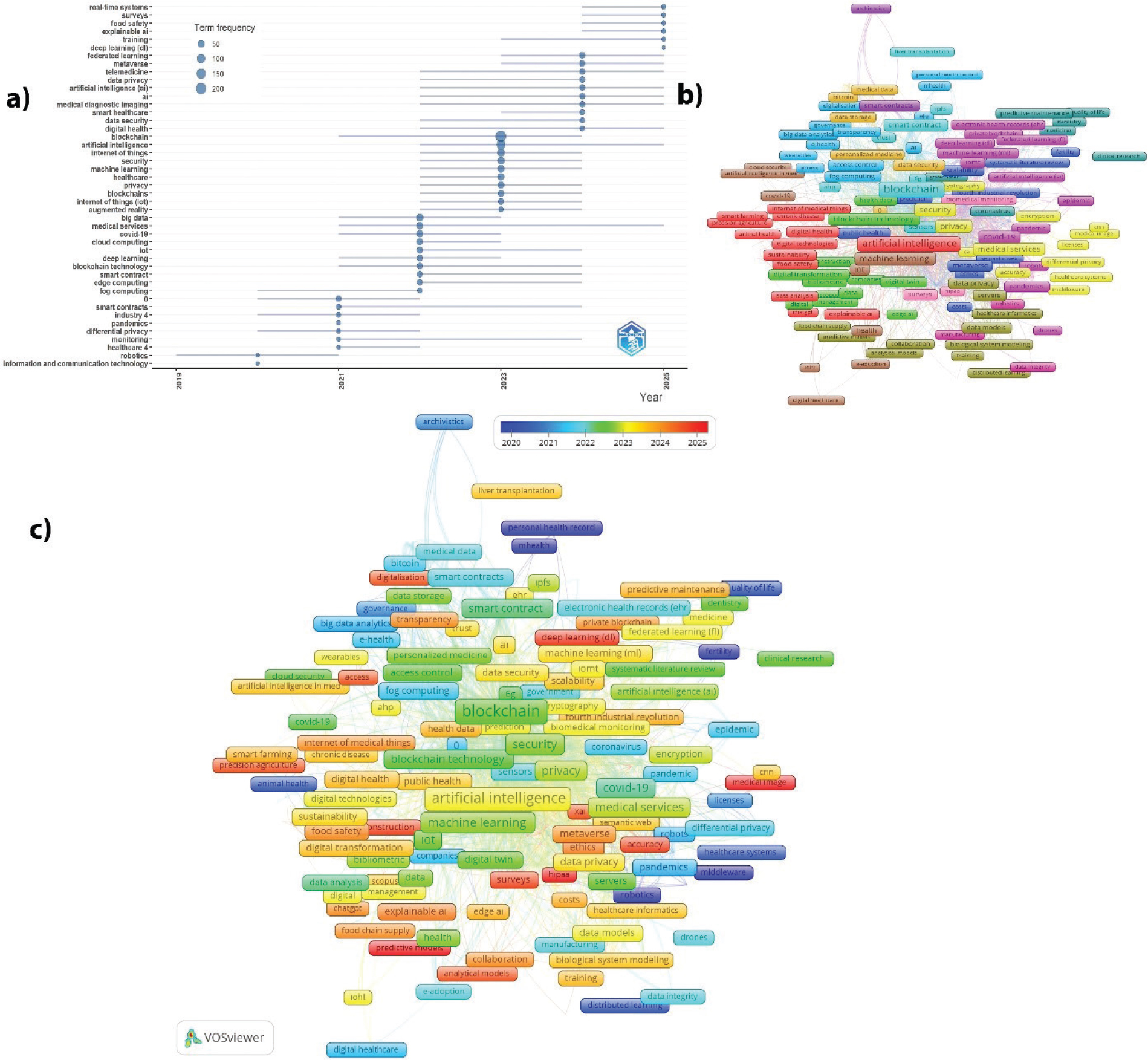
Appendix E. Articles’ trend topics (a), network (b), and overlay analyses (c) blockchain applications in artificial intelligence, cloud technology, and big data integration in the healthcare sector.
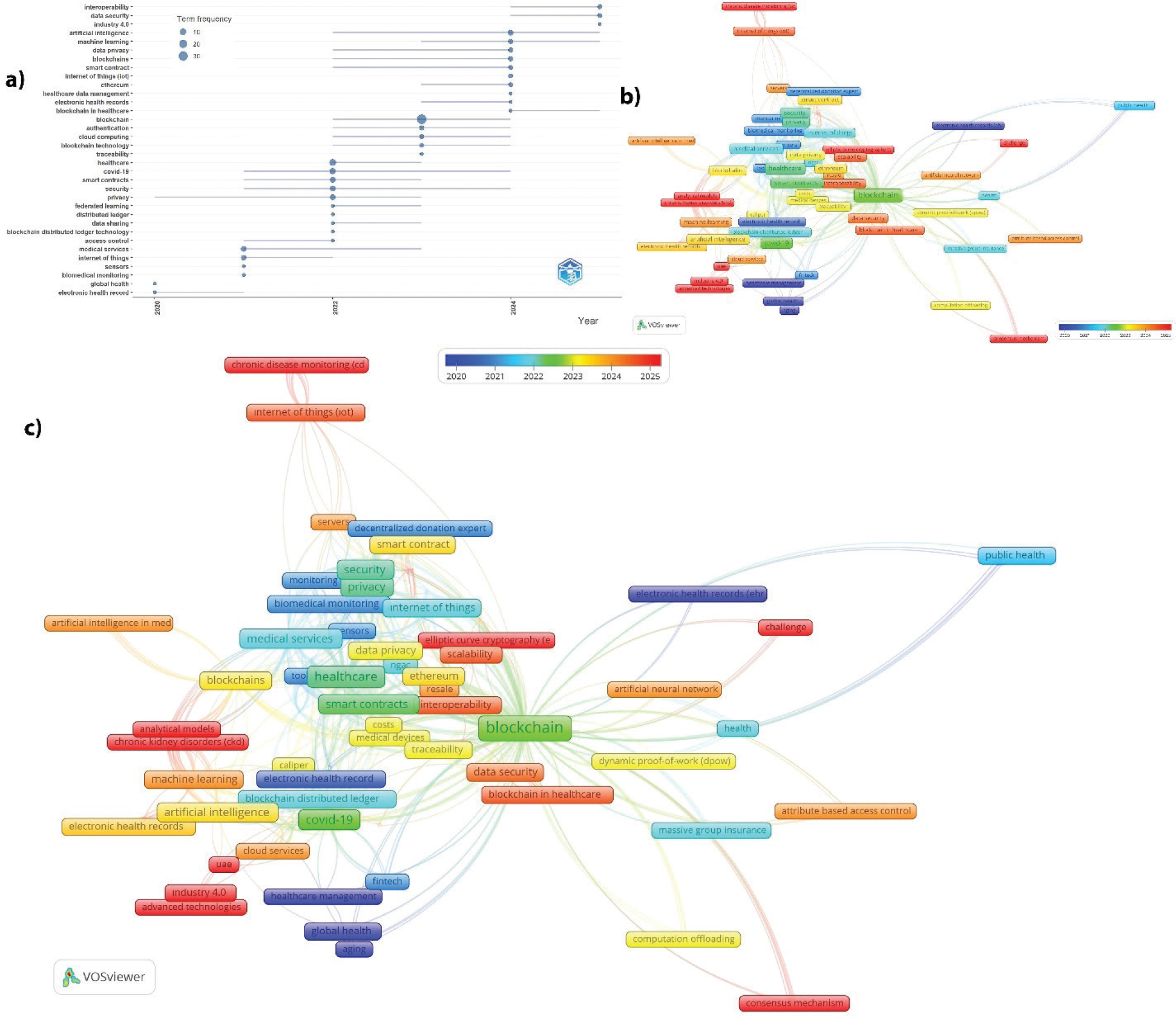
Appendix F. Articles’ trend topics (a), network (b), and overlay analyses (c) blockchain applications for solving global and regional health problems.